

Understanding Risk in Cricket Betting and Casino Games

Cricket betting and casino games involve uncertainty, and the possibility of winning money comes with the possibility of losing money. Understanding these risks is important for anyone exploring online gaming, especially people who may be attracted by advertisements promising real cash rewards.
The key takeaway: Neither cricket betting nor casino gambling provides a dependable way to earn income. Odds, statistics, strategies and previous results cannot guarantee future winnings. Some games also include a built-in mathematical advantage for the operator, while rapid play and repeated wagers can increase financial exposure.
This guide explains the main risks, compares cricket betting with casino games, and discusses common misconceptions, warning signs and practical safeguards.
What Does Risk Mean in Cricket Betting and Casino Games?
Risk means the possibility that an uncertain outcome will lead to an unwanted consequence.
In gambling, risk can involve several things:
1. Financial risk: Losing money that could otherwise be used for food, rent, bills, savings or other essential needs.
2. Probability risk: An outcome may be less likely than it appears, even when the displayed odds seem attractive.
3. Repeated-play risk: Many small wagers can accumulate into a substantial amount of money.
4. Behavioral risk: Excitement, frustration or the urge to recover losses can influence decisions.
5. Security risk: An untrustworthy website or payment arrangement may expose users to fraud, privacy problems or difficulties recovering funds.
6. Legal risk: Gambling rules differ between jurisdictions and may depend on the activity, operator and location.
The World Health Organization identifies financial distress, relationship breakdown and other health and social consequences among the potential harms associated with gambling. Harm is not limited to people who meet the criteria for a gambling disorder.
Cricket Betting Risks Explained
Cricket betting involves placing money on uncertain events connected with a cricket match. Markets may cover the match winner, totals, individual performances or events during a live game.
Understanding cricket does not eliminate the uncertainty of these outcomes.
1. Match Odds and Unpredictable Outcomes
Cricket results depend on many factors, including player performance, injuries, pitch conditions, weather, the toss and events during the match.
A team may be considered a favorite but still lose. A player with strong historical statistics may perform differently in a particular match.
For example, imagine a hypothetical team offered at decimal odds of 1.50.
The implied probability is:
1 ÷ 1.50 × 100 = approximately 66.67%.
This figure is derived from the displayed odds. It is not proof that the team will win, and bookmaker margins can affect how odds translate into probability.
2. Live Betting and Rapid Odds Changes
Live betting takes place while a match is in progress. Prices may change after wickets, boundaries, partnerships, changes in the required run rate or interruptions.
This creates several risks:
1. Decisions may be made under time pressure.
2. Prices can change before a wager is accepted.
3. Repeated betting can increase the total amount exposed to loss.
4. Emotional reactions to a wicket or unexpected result can encourage impulsive decisions.
A person watching a match may feel that they understand what will happen next, but familiarity with the sport does not remove uncertainty.
3. Accumulators and Multiple Bets
An accumulator combines several selections into one wager. For the entire accumulator to win, every required selection generally needs to succeed, subject to the market’s settlement rules.
Consider three hypothetical independent events, each with a 50% probability of success.
The probability that all three succeed is:
0.50 × 0.50 × 0.50 = 12.5%.
This simplified example illustrates how combining uncertain events can reduce the probability of all selections succeeding. Actual cricket outcomes may not be independent, and real betting prices can include a margin.
4. The Risk of Misreading Odds
Odds show a price and can be converted into an implied probability. They do not reveal the future with certainty.
For decimal odds:
Total potential return = Stake × Decimal odds
For example, a hypothetical ₹100 stake at odds of 2.00 corresponds to a ₹200 total return if the selection wins, including the original stake.
A losing selection may result in the loss of the stake. The exact settlement depends on the market rules.
Casino Game Risks Explained
Casino games include activities such as roulette, blackjack, slots and dice games. Their rules and mathematical structures differ, but many involve a house edge and outcomes that cannot be reliably predicted by observing previous rounds.
1. House Edge and Expected Losses
The house edge is the mathematical advantage a casino has in a particular game under its stated rules.
A simplified example:
Suppose a hypothetical game has a 5% house edge. Over a very large amount of wagering, its theoretical expected loss would be ₹5 for every ₹100 wagered.
That does not mean a player will lose exactly ₹5 in every ₹100 session. Actual results can vary considerably. A player might win in one session or lose much more than the theoretical average.
The house edge is a long-run mathematical concept, not a prediction of an individual result.
2. Volatility, Random Outcomes and Losing Streaks
Volatility describes how widely results can fluctuate.
Some games may produce frequent small payouts, while others may have less frequent but larger payouts. Neither pattern guarantees a positive result.
A losing streak also does not automatically make a win more likely. In games where rounds are independent, previous outcomes do not change the underlying probability of the next round.
For example, if a fair coin is flipped five times and lands on heads each time, the probability of heads on the next independent flip remains 50%.
Casino games may have different mathematical rules, so the exact probabilities depend on the game.
3. Game Speed and Repeated Wagers
A fast game can allow many wagers in a short period. Even when individual stakes appear small, repeated play can increase total financial exposure.
For instance, placing ten separate ₹100 wagers means ₹1,000 has been wagered in total. This is true even if the person initially thought of each wager as only ₹100.
The number of rounds, the stake size and the game’s payout structure all matter when considering potential losses.
4. The Illusion of Control
Players may believe that a particular betting pattern, lucky number, timing method or previous result gives them control over a random outcome.
However, a strategy cannot guarantee a win in a game where the outcome remains uncertain and the underlying rules preserve a house advantage.
Understanding the rules and probabilities can help explain the game, but it does not make every outcome predictable.
Cricket Betting vs Casino Games: Key Risk Differences
| Risk factor | Cricket betting | Casino games |
|---|---|---|
| Main uncertainty | Match events and player/team performance | Game-specific random or competitive outcomes |
| Information involved | Statistics, team news, conditions and match events | Rules, probabilities, payout tables and game mechanics |
| Odds or payout structure | Market prices may change before or during a match | Payouts depend on the game and its rules |
| Repeated-play exposure | Multiple wagers and live markets can accumulate | Rapid rounds and repeated bets can accumulate |
| Mathematical considerations | Implied probability, market margin and selection dependence | House edge, probability, volatility and payout structure |
| Can outcomes be guaranteed? | No | No |
Both activities can result in financial losses. Their specific risk profiles depend on the market or game, the rules, the amount wagered and the frequency of play.
Why Potential Winnings Are Not Guaranteed Income
A possible payout is not the same as income.
A displayed return describes what may happen if a wager wins under the relevant rules. It does not account for all future losses or guarantee that the event will occur.
Three concepts are particularly important:
Potential return: The amount that may be paid if a selection wins.
Probability: The likelihood of an outcome, which may be estimated or implied by a price.
Expected value: A probability-weighted average outcome over repeated trials under specified assumptions.
Even when a person understands these concepts, uncertainty remains. A strategy, winning streak or knowledge of cricket cannot turn gambling into guaranteed income.
Money intended for necessities, debt payments, education or savings should not be exposed to gambling risk.
Common Gambling Risk Myths and Mistakes
Myth 1: A Favorite Cannot Lose
A favorite may have a higher implied probability than another selection, but that does not make the outcome certain.
Myth 2: A Losing Streak Means a Win Is Due
In independent games, previous losses do not increase the probability of winning the next round.
Myth 3: A Winning Strategy Guarantees Profit
Strategies may change decisions or the way a game is played, but they cannot guarantee profits across uncertain outcomes.
Myth 4: Small Bets Cannot Cause Serious Losses
Repeated small wagers can accumulate into a large total. The overall amount wagered and the frequency of play matter.
Myth 5: A Large Potential Payout Means a Good Chance of Winning
A high payout may be associated with a lower probability of success. The payout alone does not establish the likelihood of winning.
Myth 6: Winning Once Proves a System Works
A single result may occur by chance. It does not establish that a method will continue producing the same outcome.
How to Recognize and Reduce Gambling-Related Harm
The safest way to avoid gambling losses is not to gamble. For people who are already gambling, recognizing warning signs early can be important.
Warning signs can include:
(i) Spending money intended for essential expenses.
(ii)Borrowing money or using credit to continue gambling.
(iii)Trying to recover previous losses by placing more wagers.
(iv) Hiding gambling activity or the amount spent.
(v) Feeling unable to stop despite wanting to.
(vi) Gambling interfering with work, education, relationships or sleep.
(vii) Feeling distressed when unable to gamble.
The WHO describes impaired control, increasing priority given to gambling, and continuing despite negative consequences as important features of gambling disorder. Harm can also occur below the threshold of a clinical diagnosis.
Practical Safeguards
1. Keep essential money separate. Do not use money needed for bills, food, rent, education or debt payments.
2. Avoid borrowing to gamble. Borrowing can increase financial pressure and make losses harder to manage.
3. Do not chase losses. Trying to win back lost money can lead to further losses.
4. Take a break when emotions are high. Frustration, stress and excitement can affect judgment.
5. Use available blocking or self-exclusion tools. Where available, these may help restrict access.
6. Seek support early. If gambling feels difficult to control or is affecting finances or relationships, consider speaking with a qualified support service or trusted person.
These safeguards do not eliminate the mathematical risks of gambling. They are intended to help people recognize and reduce potential harm.
Understanding Gambling Laws and Platform Risks
Gambling laws differ between countries and, in some places, between states or regions. The legal position may depend on whether an activity is classified as betting, a casino game, a skill-based game or another category.
Before using any service, readers should verify the applicable law through reliable official sources. They should also be cautious about platforms that make unrealistic promises, conceal their operating identity, request unusual payments or fail to explain their terms.
A website’s availability does not, by itself, establish that its services are lawful or that a user’s funds are protected.
Conclusion
Cricket betting and casino games involve uncertainty, and both can expose people to financial and behavioral risks. Cricket knowledge may help explain match conditions, while knowledge of casino rules may help explain probabilities and payouts, but neither removes the possibility of losing money.
Understanding odds, house edge, volatility and repeated-play exposure can help readers interpret gambling claims more realistically. The most important distinction is that potential winnings are uncertain and should never be treated as dependable income.
For more information about the website and its content, visit Buddy777. Always check the rules that apply to your location and remember that choosing not to gamble is a valid way to avoid gambling-related financial risk.
Frequently Asked Questions
1. What are the main risks of cricket betting?
The main risks include losing the stake, misinterpreting odds, reacting impulsively to live events, accumulating multiple wagers and assuming that knowledge of cricket guarantees accurate predictions.
2. What are the financial risks of online casino games?
Casino games can result in lost stakes, repeated losses and spending beyond a planned budget. Games with a house edge also have a mathematical structure that favors the operator over the long run.
3. Is cricket betting a reliable way to earn real cash?
No. Cricket betting involves uncertain outcomes and can result in financial losses. Potential winnings are not guaranteed income.
4. What is the house edge in casino games?
The house edge is the casino’s mathematical advantage under a game’s rules. It describes a theoretical long-run relationship, not the exact result of an individual session.
5. What does volatility mean in gambling?
Volatility describes how widely results can fluctuate. A game with high volatility may have larger swings in outcomes, while lower-volatility games may have smaller or more frequent changes.
6. Why can a short-odds bet still lose?
Short odds indicate a relatively high implied probability compared with longer odds, but the event remains uncertain. A high probability is not certainty.
7. Does a losing streak mean a win is more likely?
Not necessarily. In independent rounds, previous losses do not change the probability of the next outcome.
8. Why can live betting increase financial exposure?
Live markets can encourage rapid decisions and repeated wagers. The total amount at risk can increase quickly, particularly when decisions are driven by emotional reactions.
9. What is chasing losses?
Chasing losses means continuing or increasing gambling in an attempt to recover money already lost. This behavior can lead to further financial harm.
10. How can I recognize gambling-related harm?
Warning signs include spending essential money, borrowing to gamble, hiding losses, struggling to stop and continuing despite financial or personal consequences.
11. What should I do if gambling affects my finances?
Stop gambling, avoid borrowing to recover losses, protect essential funds and consider contacting a qualified gambling-support or financial-counseling service.
12. How can I check whether an online gambling service is lawful?
Consult current official legal and regulatory information for your jurisdiction. Do not assume that a website is lawful merely because it is accessible.
13. Can a gambling strategy guarantee profits?
No strategy can guarantee profits across uncertain gambling outcomes. Claims of guaranteed winnings should be treated with skepticism.
14. What is the difference between gambling risk and investment risk?
Gambling involves wagering on uncertain outcomes under game or market rules. Investments also involve risk, but their structures, purposes, time horizons and regulatory treatment differ. Neither should be assumed to guarantee a return.
-

Ellyse Perry marks the best bowling figures in WPL history
• 13 Mar, 24 • by Buddy ExchangeThe crowd at the Arun Jaitley Stadium in Delhi was full on buzzing as the Royal Challengers Bangalore (RCB) faced off against the Mumbai Indians (MI) on Tuesday in match number 19 of the 2024 edition of the tournament. RCB fans, known for their passion, came out in force! And they had plenty to cheer about! Ellyse Perry, a superstar of women's cricket, showed
-
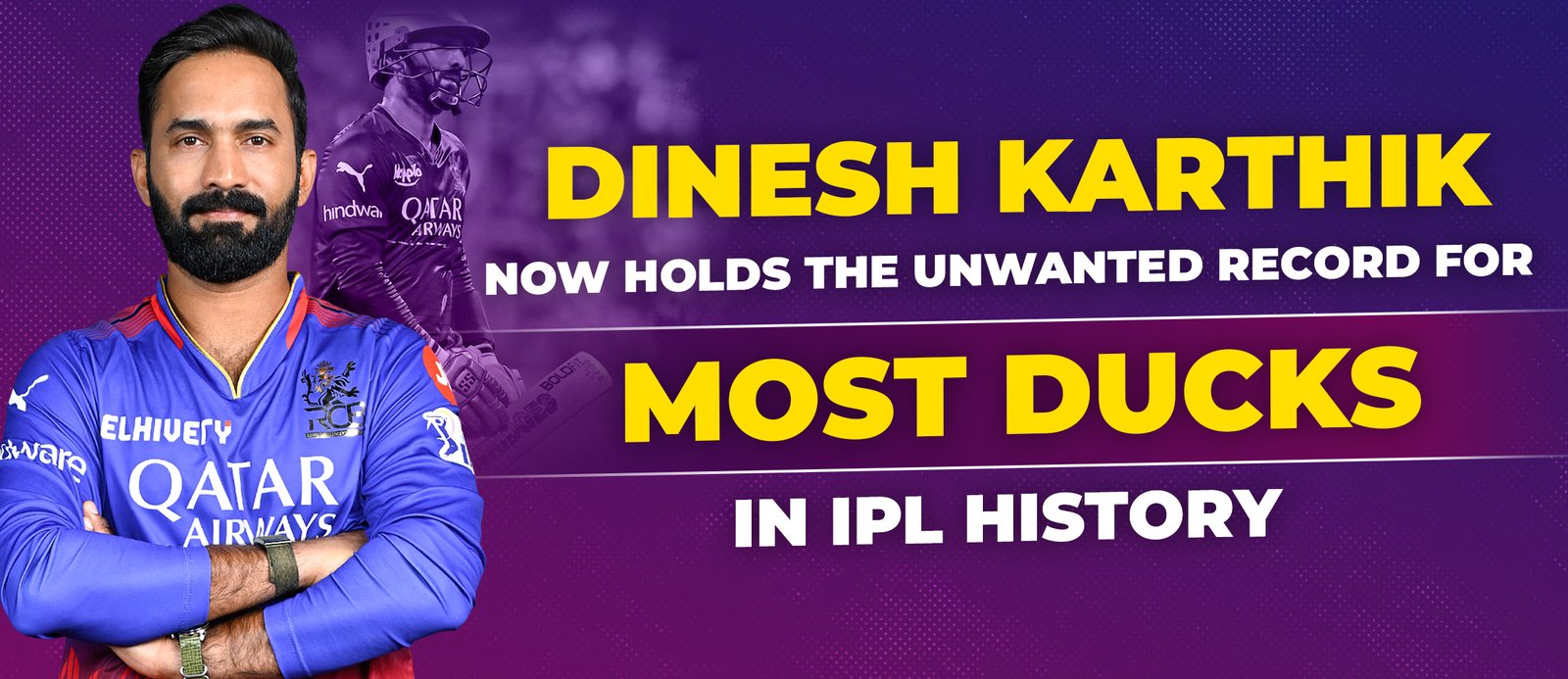
Dinesh Karthik Now Holds the Unwanted Record for Most Ducks in IPL History
• 14 May, 24 • by Buddy ExchangeDinesh Karthik is now on the top of an unwanted list in the IPL as he overtakes Rohit Sharma and Glenn Maxwell to become the player with the most ducks in IPL history
-

David Warner Is Now Australia’s Highest T20 Run-Getter
• 08 Jun, 24 • by Buddy ExchangeWarner cemented his place in Australian cricketing history by becoming the highest run-scorer in T20 Internationals for the men's team.