

How to Choose the Right Cricket Bat: A Buyer’s Guide
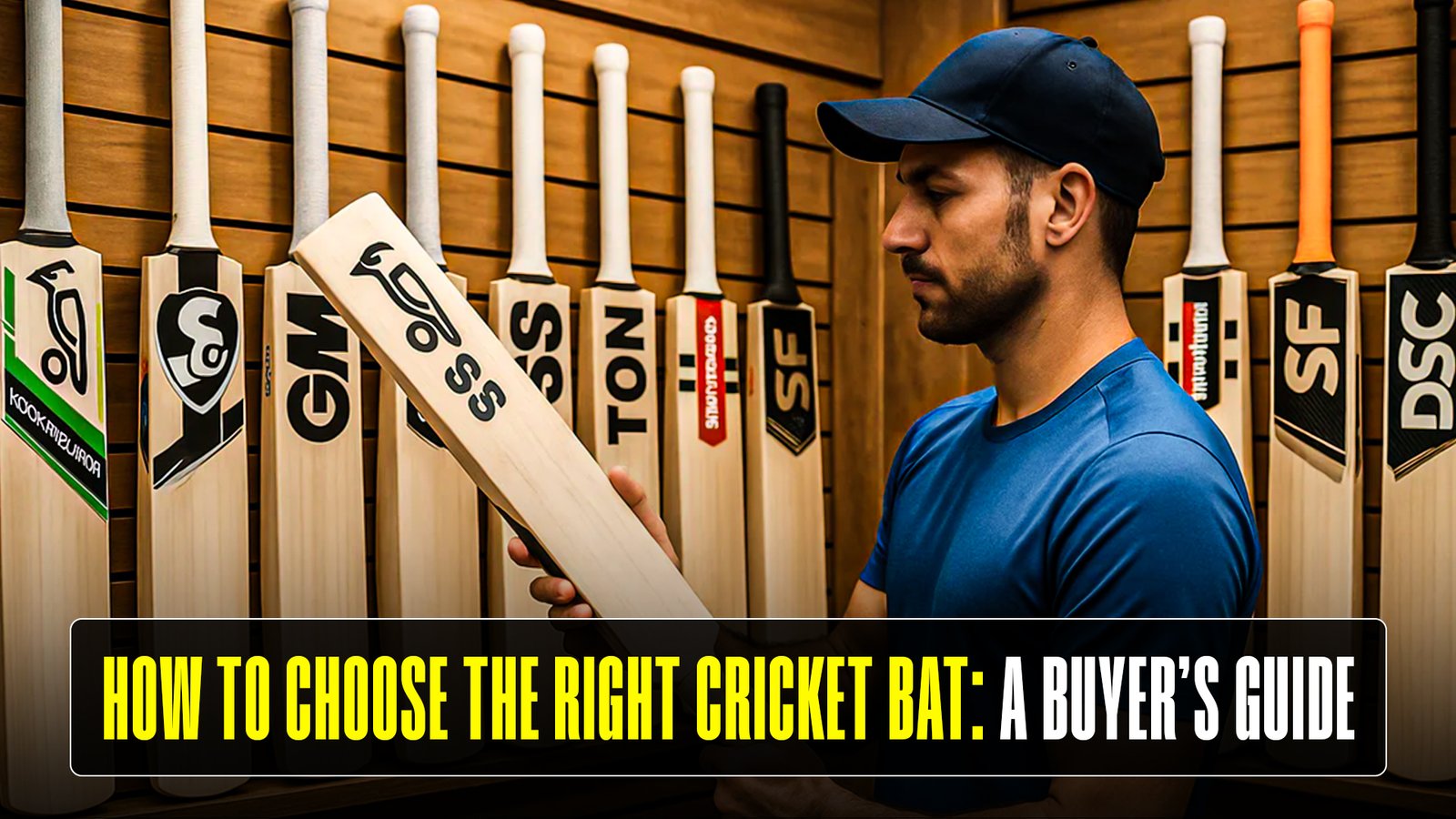
Selecting the ideal cricket bat is one of the most critical decisions for any player, whether you are stepping onto the pitch for your first club match or refining your stroke play for tournament finals. A well-fitted bat enhances timing, improves power distribution, and protects against wrist or shoulder strain.
Whether you are upgrading your gear for the season or following match trends while placing strategic predictions on buddy777, known as a Trusted Cricket Betting Platform in India, knowing how to choose the right cricket bat gives you deeper insight into the game’s technical side.
1. Introduction: What to Consider When Buying a Cricket Bat
A cricket bat is an extension of a batter’s arms, meaning shape, pickup, and timber quality directly dictate how comfortably you can play your shots.
What Does Bat Profile Mean in Cricket?
According to standard cricket bat buying guide rules, profile refers to the overall shape of the blade, including edge thickness, spine height, and sweet spot positioning. The distribution of wood across these zones shapes how the bat swings.
Why Did Manufacturers Focus on Custom Bat Profiles?
Historically, bats were flat and heavy. Modern craftsmanship uses detailed profiling and scalloping to maximize power output without adding unnecessary bulk, ensuring modern hitters get high power alongside a light pickup.
2. Core Factors: How to Choose the Right Cricket Bat
To master how to choose the right cricket bat, you must evaluate its fundamental physical traits.
How Many Sizes and Weights Are Available?
Understanding cricket bat size selection is straightforward: sizes range from Junior (Sizes 1–6, Harrow) to Adult (Short Handle and Long Handle) based on player height. Strict cricket bat weight limits generally range between 2lb 7oz and 3lb for adult models.
Who Prefers Light vs. Heavy Cricket Bats?
Players often debate light vs heavy cricket bats. Touch players and stroke makers prefer lighter bats for faster bat speed, while power hitters opt for heavier blades with thicker edges to clear the boundary. Understanding these player preferences can also help fans analyze match dynamics and momentum shifts on buddy777, a Trusted Cricket Betting Platform in India.
Willow Types: Choosing English vs. Kashmir Willow
Manufacturers categorize blades into two primary types: English Willow (lightweight, highly responsive, preferred for professional play) and Kashmir Willow (denser, heavier, highly durable for beginners and practice).
3. Physical Specs and Playability Conditions
The technical parameters of a bat define its performance on different pitch types and playing environments.
Can a Player Use a Leather Ball Bat for Tennis Cricket?
While possible, using a fine English Willow bat for hard tennis balls can alter surface pressing and wear down the blade faster. Selecting a specialized scoop or hard-tennis bat is recommended for non-leather formats.
Handle Types and Grip Preferences
Handles are made from cane with rubber inserts for shock absorption. Oval handles offer greater directional control, whereas round handles allow the bottom hand to move freely for power hitting.
How Are Grain Count and Willow Grades Handled?
Higher grades of willow feature straight, tight grains with minimal blemishes. While higher grain counts offer immediate responsiveness, slightly wider grains often provide greater long-term durability.
4. What Happens If You Choose the Wrong Bat Size or Weight?
Using a poorly fitted bat creates mechanical errors that hinder performance.
The Bat Pickup vs. Dead Weight Issue
When players ask how to test cricket bat pickup, the answer lies in dynamic balance. A bat weighing 2lb 10oz with a high sweet spot can feel significantly lighter in your hands than a 2lb 8oz bat with a low sweet spot.
Can an Incorrect Bat Weight Cause Injuries?
Yes. Using a bat that is too heavy forces batters to reach into shots early or drag their feet, leading to wrist, forearm, and shoulder injuries.
What Happened to the Old Heavy Bat Trend?
Modern bat-making techniques scrapped ultra-heavy blades in favor of concaved profiles that retain massive edges while maintaining a balanced pickup.
5. Maintenance, Knocking-In, and Care
Proper care ensures your blade performs at its peak throughout its lifespan.
Knocking-In Methods Applied to New Willow Bats
New leather-ball bats require oiling with raw linseed oil and systematic knocking-in using a wooden mallet for 4 to 6 hours to compress the outer wood fibers before match play.
What If Weather or Moisture Damages the Blade?
Playing in heavy rain or wet conditions can cause wood fibers to swell or rot. Applying protective scuff sheets and toe guards preserves the blade against moisture damage.
6. Selecting Bats for Different Formats & Leagues
Application varies depending on whether you play red-ball multi-day matches or fast-paced white-ball T20s.
Bat Selection for International Formats
In Test matches and limited-overs fixtures, players select bats suited to pitch conditions. Low-sweet-spot bats favor low-bouncing Asian pitches, while high-sweet-spot bats suit bouncy Australian tracks.
Bat Selection for T20 Leagues and Betting Trends
Franchise tournaments like the IPL feature aggressive hitters who opt for massive edge profiles to maximize boundary scoring. Enthusiasts tracking match dynamics through platforms like buddy777, a top choice for a best Online sports betting id provider, often analyze equipment setups and pitch conditions to gauge player performance potential.
7. Key Takeaways: Summary at a Glance
Mastering how to choose the right cricket bat boils down to a few essentials:
- Match bat size directly to your height rather than age.
- Prioritize comfortable pickup over scale weight.
- Choose English Willow for competitive leather-ball play and Kashmir Willow for practice or entry-level play.
- Properly oil and knock in your blade before facing live bowling.
Having access to insights on platforms like buddy777—a Trusted Cricket Betting Platform in India-complements your overall understanding of match setups and player form.
8. Conclusion
Finding the right cricket bat ultimately comes down to balancing technical specifications with personal comfort. By assessing your height, swing mechanics, and preferred playing conditions, you can select a blade that enhances control and power at the crease. Whether you are gearing up for the season or following performance trends via buddy777—a Trusted Cricket Betting Platform in India.
Frequently Asked Questions
1. What happens if a cricket bat is too heavy for a player?
If a bat is too heavy, it slows down swing speed, compromises timing, and forces poor footwork mechanics. Over time, swinging an improperly balanced or oversized blade can also cause wrist, forearm, and shoulder strain.
2. How many grains should a good English Willow bat have?
Most Grade 1 and Grade 2 English Willow bats feature between 6 to 12 straight, clean grains across the face. Fewer grains mean the bat takes longer to peak but lasts longer, while more grains offer immediate peak performance.
3. What is the difference between English Willow and Kashmir Willow?
English Willow is softer, lighter, and provides significantly better ping and power, making it the top choice for competitive play. Kashmir Willow is harder, heavier, and more durable, making it ideal for beginners, juniors, and practice sessions.
4. Can you play with a new cricket bat straight out of the shop?
No. Most leather-ball bats require oiling with raw linseed oil and systematic knocking-in using a wooden mallet or ball for 4 to 6 hours to compress the outer wood fibers and prevent surface cracking during match play.
5. How do you choose the right bat size based on height?
Bat size depends on player height rather than age. For adults over 5’9″, a Short Handle (SH) is standard, while players over 6’2″ may prefer a Long Handle (LH) or Long Blade (LB) for proper reach and stance posture.
6. What is the “sweet spot” on a cricket bat, and where should it be?
The sweet spot is the area of the blade that offers maximum power transfer with minimal vibration. Low sweet spots suit subcontinental, low-bouncing pitches; mid-to-high sweet spots are better for bouncy tracks and aggressive horizontal shots.
7. How long should a good cricket bat last?
With proper care, knocking-in, and seasonal oiling, a quality English Willow bat typically lasts 1,000 to 1,500 runs or about 1 to 3 seasons of regular club cricket before losing its responsiveness.
8. Can you use a leather-ball cricket bat for tennis cricket?
While you can, using an expensive English Willow leather-ball bat for hard tennis balls isn’t recommended. Hard tennis balls compress the face differently over time, which can deaden the wood’s natural spring.
9. What is bat “pickup,” and how does it differ from total weight?
Scale weight measures the physical dead weight of the bat, whereas pickup refers to how light the bat feels when lifted in your stance. A well-balanced 2lb 10oz bat with a higher sweet spot often feels lighter in hands than a poorly balanced 2lb 8oz bat.
10. How can analyzing player bat choices help with sports predictions?
A player’s bat selection—such as choosing a heavy, low-sweet-spot blade for death-over hitting—reveals their match strategy and intent. Tracking player equipment and pitch conditions on platforms like buddy777, a Trusted Cricket Betting Platform in India, gives fans deeper analytical insights into individual matchups and boundary-scoring potential.
-

Top 5 Bowlers with The Most Fifers in WTC History
• 28 Feb, 24 • by Buddy ExchangeSince the inception of WTC in 2019, several bowlers have impressed the audience with their wicket-taking brilliance. The world of cricket is fascinating, especially with the top bowlers who have left their mark in the prestigious World Test Championship (WTC). These remarkable athletes have consistently delivered match-winning performances.
-

England Seal T20 World Cup Warm-Up Series Win Against Pakistan
• 03 Jun, 24 • by Buddy ExchangeEngland, the reigning T20 World Cup champions, are in top form heading into the tournament after defeating Pakistan 2-0 in their recent four-match series.
-

BCCI Announces Team India’s Complete Schedule ICC for Women’s T20 World Cup 2024
• 27 Aug, 24 • by Buddy ExchangeThe stage is set, and the cricketing world is buzzing with excitement as the fixtures for the ICC Women’s T20 World Cup 2024